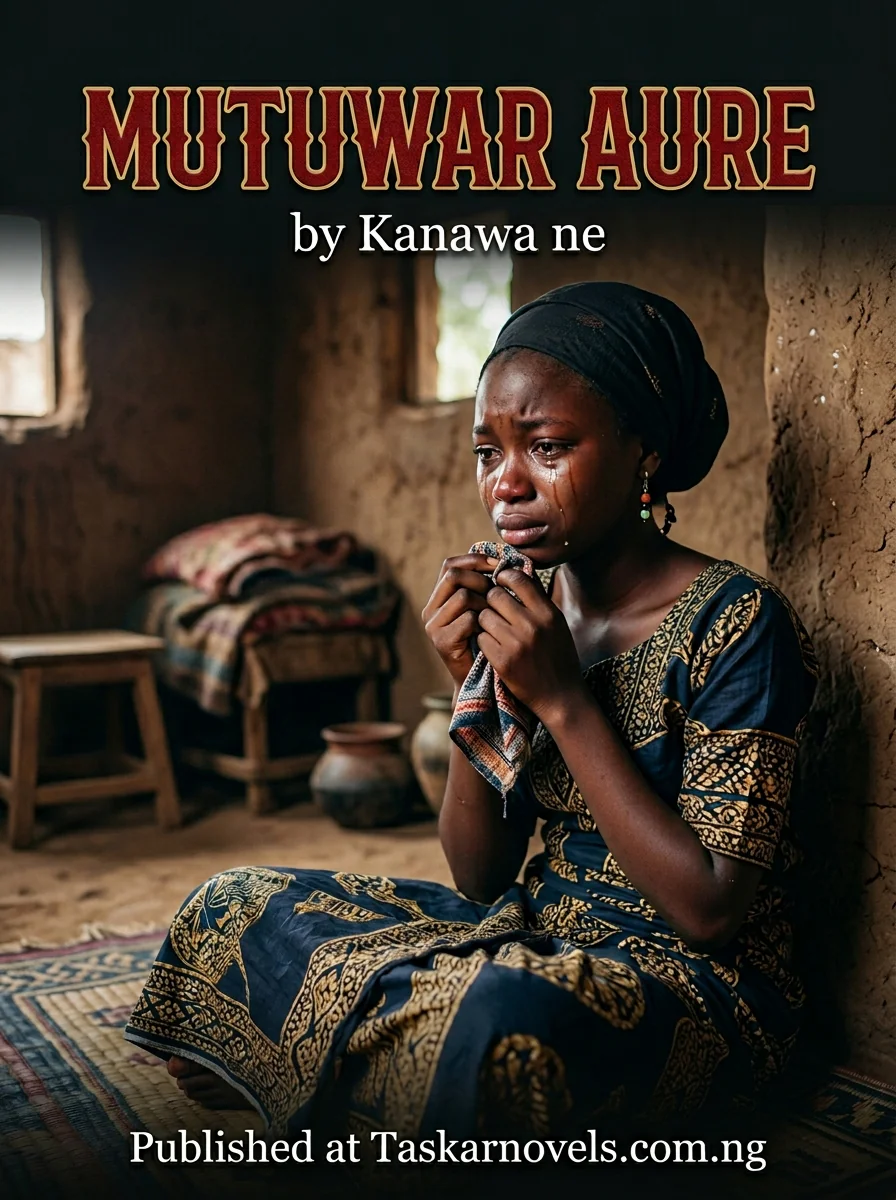
Imagine a small, crowded neighborhood in Kano back in 2009. The place is called Rimin Kebe. It is the kind of place where houses are packed together, and you can hear the noise of people everywhere. In one of these houses lives a young girl named Asma’u, but everyone calls her Husnan Baba. She is only eleven years old, but her life is already very heavy. The author, Kanawa ne, starts this story by talking about how hard it is for a child to grow up without a mother. It is like a dark cloud over their head. Even if a stepmother is good, she can never really be like a real mother. The story asks a deep question about why stepmothers are often seen as the villains in our society. Is it just how they are, or is it the way things happen?
Asma’u is a sweet girl, but you can see the sadness in her eyes. One morning, she is sent to buy koko, which is a type of porridge, from a place called Dorawa. She is walking slowly, holding a small white plastic bucket. Her clothes are a bit old, a long Java print dress, and her black knitted cap doesn’t even cover all her hair. Her braids are sticking out, and her feet are covered in dust from the road. She looks like any other kid running an errand, but inside, she is full of fear. When she gets to a big ditch, she stops. There is no wooden plank to help her cross, and she is too small to jump over it while carrying the porridge. She just sits there at the edge of the ditch, staring at the water, waiting for someone to help her. It is so lonely to see a child sitting by a gutter for ten minutes because she has no one to look after her. You can find more emotional stories like this when you download Hausa novels.
Finally, a neighbor named Abban Bishira comes by. He sees her and is surprised to find her all alone. He asks where her brother is. As soon as he mentions her brother, Asma’u starts crying. Her voice shakes as she tells him something that breaks your heart. One part of the book says — "It was Iyar Kyauye who chased them away, him and my mother. Every time I ask Baba to take me to them, he says I have to grow up first." (translated from Hausa). This is the big pain in her life. Her mother and her brother were sent away, and she is left alone in a house where she is not wanted. The neighbor doesn't really understand the whole drama, but he feels bad for her. He helps her cross the ditch and walks her back to her street. She enters her house quietly, like she is trying to be invisible.
The house belongs to Malam Abdullahi Mai Kano. It’s a decent house with three rooms and a big Dirimi tree in the middle that gives a lot of shade. But for Asma’u, this shade doesn't bring any peace. As soon as she steps inside, she meets Ni’ima, her stepsister. Ni’ima is not kind at all. She looks at Asma’u with so much hate. She yells at her, calling her names. She says — "You bastard hypocrite, blood of infidels, stop looking at me with those greedy eyes before I pluck them out." (translated from Hausa). It is hard to believe a sister could talk to a little girl like that. This kind of family drama reminds me of the tension in MABARACIYAH, where life at home is also a big struggle.
Then Nana, the stepmother, comes out of her room. She is already angry because Asma’u took a long time to bring the porridge. She doesn't care that the girl had trouble crossing the ditch. She just sees it as being stubborn. When Asma’u tries to hand over the bucket, Nana reaches out and snatches it with so much force that the handle snaps off. The bucket falls, and all the porridge spills onto the cement floor. It’s a mess. Instead of being sorry or checking if the girl is okay, Nana gets even angrier. She tells Asma’u that because she "wasted" the food, she won't get any breakfast at all. She has to wait until the afternoon to eat. This is so cruel because Asma’u didn't even eat dinner the night before. She went to bed hungry because the food wasn't ready before she fell asleep. If you like reading about these kinds of life challenges, you should check out MAFARI HARGITSIN RAYUWA on the site.
Asma’u goes and sits under the big Dirimi tree. She puts her head on her knees and just cries. She watches as Nana and Ni’ima bring out a mat, sit down, and start eating their own food. They talk and laugh as if Asma’u isn't even there. They don't offer her a single bite. Nana even says that the girl's father won't be home until late at night, so there is no one to protect her. Asma’u feels like she has no one in the world. She eventually goes into their room and lies down on her small mat in the corner. She is so hungry that her stomach is making noises and hurting. She starts talking to her mother in her mind, imagining that her mom can hear her. She says — "Mama, I am hungry, I want to eat. Baba doesn't love me, I don't see him anymore. Please Mama, tell him to take me to you and my brother." (translated from Hausa). It is a very sad moment that shows how much a child suffers when a marriage breaks down.
The title "Mutuwar Aure" really fits because it shows the "death" of a family after a divorce. It’s not just about the husband and wife splitting up; it’s about the children who get caught in the middle. Asma’u is living a life where she is treated like a servant or an enemy in her own father's house. Her father, Malam Abdullahi, seems to be busy or just not paying enough attention to what is happening when he is away. It makes you wonder how many children are going through this right now. For more stories about family and love, you can look for TATTALIN SO or ABBANA on the Taskar Novels website. They have a lot of great books there.
As you read further into the story by Kanawa ne, you see more of the secrets of the house. You start to understand why the mother was sent away and who "Iyar Kyauye" really is. The way the author describes the neighborhood of Rimin Kebe makes you feel like you are walking those dusty streets yourself. You can almost smell the woodsmoke from the fire Nana uses to cook. The drama keeps building up, and you just want someone to come and save little Asma’u from her mean stepmother. It’s a real page-turner for anyone who loves a good drama. If you want to find more of the best Hausa novels, you should definitely browse through the collection online. There are books like KURMAN ƘADDARA and DABAIBAYI that are just as emotional as this one.
I really felt for Asma’u when she was lying on that mat, crying for her mother. It reminds us all to be kind to children, especially those who don't have their parents around. The way the story is written is very simple but it hits you right in the heart. You don't need big words to explain pain. Seeing a child go hungry while others eat right in front of her is enough to make anyone sad. This book is a must-read if you want to understand the reality of some homes in our society today. You can find this novel and many other Hausa novels online very easily. It’s great that we have places where we can get these stories and share them with friends who love reading as much as we do.
If you want to read the full story of Mutuwar Aure and see what happens to Asma’u, you can find it on Taskar Novels. They have so many books that will keep you busy all day. Whether you like drama, love stories, or stories about life struggles, that is the best place to go. Go check it out and see all the amazing stories waiting for you there!