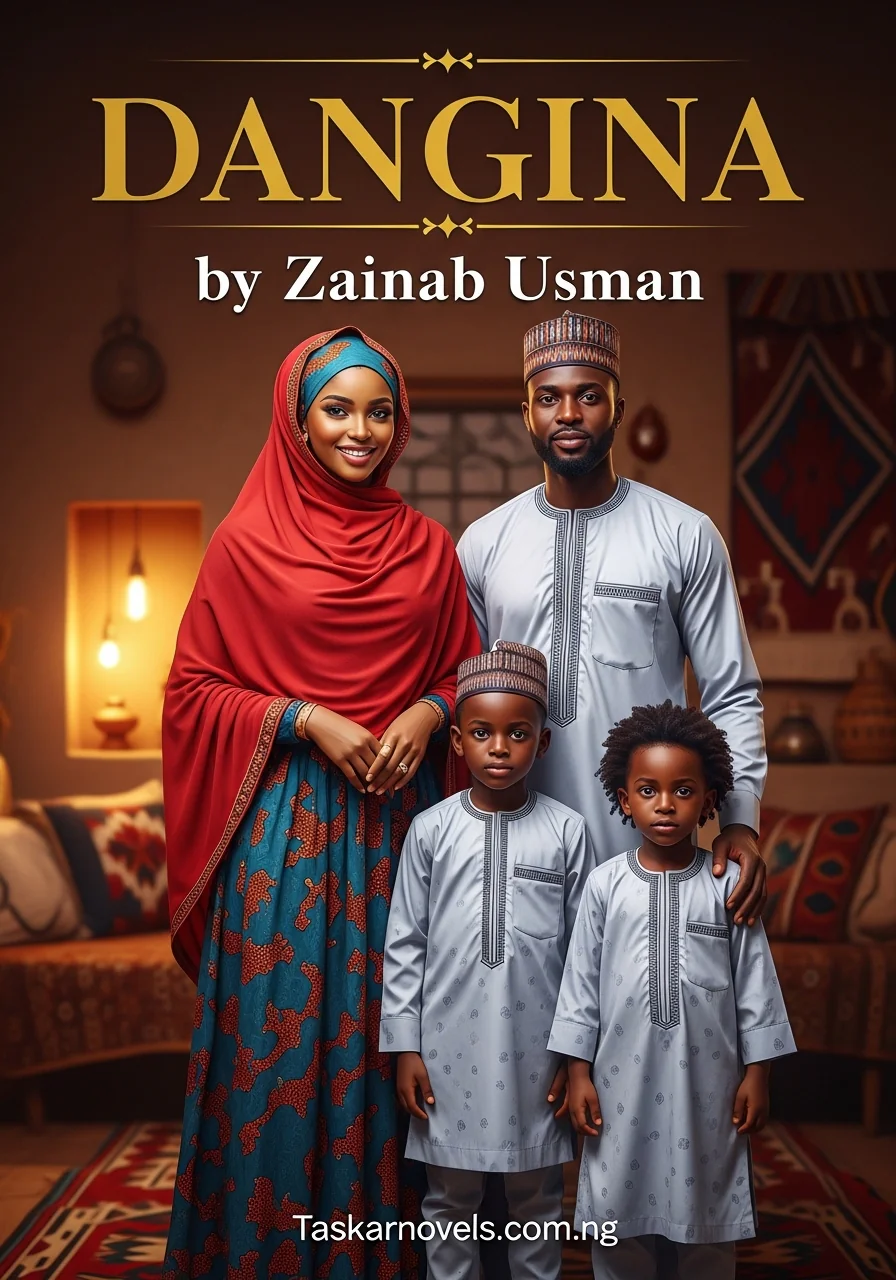
Imagine a normal day in a busy neighborhood where young guys are just hanging out at their usual spot. They are shouting and arguing about a football match from the night before. You know how it is with boys. One person loves one club, and another person hates it. They all watched the same game at the same place, but now they are acting like they saw different things. Suddenly, the sound of car tires screaming against the ground stops everyone. A car pulls up fast, and people start wondering if there was an accident. But it wasn't an accident. It was the start of serious drama between two girls who are madly in love with the same man. This is how the story of Dangina begins, and let me tell you, it is full of heat from the very first page.
Hafsat jumps out of the car like she was thrown out. She is angry and heading straight for another girl named Nusaiba. Nusaiba is just walking down the street, looking all dressed up and feeling herself. Hafsat’s friend, Kareema, tries to stop her. She tells her not to start a fight in front of all these men, but Hafsat is not listening. Before anyone can even breathe, the two girls are fighting. It is messy and loud. One part of the book says — "Are you even big enough to love the guy I love? What do you have that makes you so proud? I swear if you don't stay away from Abdul-Kareem, I will change your face for you!" (translated from Hausa). This shows you how crazy things are. Hafsat is shouting with spit flying out of her mouth because she is so jealous. She can't stand the fact that Nusaiba is also chasing the same guy.
Nusaiba is not a soft girl either. She doesn't just stand there and take it. She fights back with words and her hands. She tells Hafsat that the same obsession making Hafsat crazy is what is keeping her hooked on Abdul-Kareem too. They start punching each other and pulling hair right there in the street. The boys at the hangout have to jump in to separate them. It is shameful because they are girls fighting over a man who doesn't even seem to care about them. If you love stories with this kind of raw street drama, you should check out more at Taskar Novels. It reminds me of the tension you find in other books like FARA YAR SHEHU where emotions always run very high. These girls are literally tearing their clothes off in public just because of a guy they call Mai Jama'a.
After the fight, both girls are looking like a mess. Hafsat has a bloody nose and Nusaiba has a swollen lip. They are both breathing hard like wrestlers. The boys tell them to leave the area before Mai Jama'a himself comes out. They know that if he sees them acting like this, it won't be funny. He is the type of guy who doesn't tolerate nonsense. Kareema, who is the more sensible friend, helps Hafsat into the car. She tries to talk some sense into her, asking her why she is throwing away her dignity for a guy who ignores her. But Hafsat is too far gone. She says she spends every night and day thinking about him. It is sad but also very interesting to see how love can make someone lose their mind. You can find many stories about this kind of deep passion when you download Hausa novels from the right places.
While the girls are leaving with their bruises, one of the guys named Sadeeq goes inside the main house. He goes to see Hajiya Innah, who is the grandmother of the house. Zainab Usman does a great job of making Hajiya Innah feel like a real person you know. When Sadeeq enters, he finds her sitting on a long sofa, happily eating fried peanuts. She is so focused on her snack that she doesn't even answer his greeting at first. She starts complaining that people only come around her when she has something good to eat. She says — "Oh me, Aminatu, I have seen things! Can't someone even enjoy their little snacks without people crowding around like hungry spirits?" (translated from Hausa). She is a funny character who adds a lot of life to the story. She is the heart of the family, and her house is where everything happens.
Sadeeq tells Hajiya Innah about the fight outside. He tells her that her grandson's girlfriends are almost killing each other. Hajiya Innah gets shocked and almost drops her peanuts. She starts shouting and asking why nobody called her to go and see the drama herself. She is annoyed that these girls are turning the front of her house into a boxing ring. But then she starts talking about her grandson, Abdul-Kareem, the one they call Mai Jama'a. She says he is too much of a "strong man" with his big muscles and his gym life. She wonders why girls are so obsessed with him when he looks like a wrestler. It is funny because she thinks he is too scary-looking for all this attention. This kind of family banter is what makes JA YA FADO JA YA DAUKA such a good read too, because it shows the funny side of big households.
The story moves deep into the lives of this family. Abdul-Kareem is a man of few words. He is handsome, strong, and has a presence that makes girls go crazy. But he is also cold. He doesn't give Hafsat or Nusaiba the time of day. He treats them like they don't exist, which only makes them want him more. It is a toxic cycle. Hafsat thinks that because she is rich and has a car, she should get him. Nusaiba thinks her beauty is enough. But Abdul-Kareem is looking for something else, or maybe he isn't looking at all. The way the author describes his character makes you want to know what is going on in his head. If you enjoy reading about complicated men like him, you will find plenty of Hausa novels online that follow this theme.
There is also a lot of talk about other family members and the secrets they keep. In a big house like this, everyone has something they are hiding. The title Dangina means "My Family," and it really focuses on the bonds and the fights between relatives. Sometimes the people who are supposed to love you the most are the ones who cause the most drama. You see sisters-in-law fighting and cousins keeping secrets. It reminds me a bit of the secrets in SUGAR MUMMIES where people lead double lives. In this book, the drama is more about respect and who belongs to who. Hajiya Innah tries to keep everyone together, but it is hard when the young ones are so wild.
As the story goes on, you see more of the dark side of this obsession. It is not just about two girls fighting in the street. It becomes about how far someone will go to get what they want. Hafsat starts thinking of ways to get rid of her competition. She is not just angry; she is becoming dangerous. The tension builds up slowly. You start feeling sorry for Nusaiba, even though she was also part of the fight. The author makes you feel the heat of the sun in the neighborhood and the dust in the air during the fight. You can almost hear the voices of the neighbors gossiping. For fans who love stories about intense relationships and family ties, looking for the best Hausa novels will lead you to gems like this one.
The book also touches on how the community looks at these girls. In a traditional setting, a girl fighting in the street is a huge scandal. Their parents get involved, and things get even more complicated. The shame follows them everywhere. But even with all that shame, the heart wants what it wants. Abdul-Kareem remains at the center of it all, like a king who doesn't know his kingdom is on fire. He continues his life, going to the gym and hanging out, while lives are falling apart because of him. This kind of "tough guy" lead is common in books like HARIJIN TSOHO, where the main man has a lot of power over the women around him.
Later in the book, we see some softer moments too. It is not all fighting. There are scenes where the family sits together, and you see the love they have for each other. Hajiya Innah’s jokes always break the tension. But you know that the peace won't last long. There is always someone waiting around the corner to start something new. The drama between the girls is just the beginning. There are bigger issues about marriage and tradition that come up. If you like stories about royal families or high-stakes drama, you might also like JININ SARAUTA, which deals with similar themes of heritage and expectations.
One thing I really liked about this story is how it doesn't try to be perfect. The characters are flawed. They make mistakes. They are selfish. Hafsat is not a hero, and Nusaiba is not a villain; they are just two girls caught up in a bad situation. It feels very real, like something that could happen in any street in Kano or Kaduna. Even the secondary characters, like the girls in YAN ASHAWO, show a side of life that is often hidden. Zainab Usman shows us the side of love that is ugly and loud, not just the flowers and sweet words.
By the time you get to the end of Book 2, you will be gasping for breath. So many things happen that you didn't see coming. The family dynamic changes, and the stakes get higher. You will find yourself rooting for characters you hated at the start and feeling angry at characters you liked. It is a roller coaster of emotions. If you want to read the whole thing and see how the fight between Hafsat and Nusaiba ends, and if Abdul-Kareem ever chooses one of them, you need to get your hands on these books. You can find this novel and many other amazing stories on Taskar Novels. It is the best place to find all the drama, romance, and family stories you love.