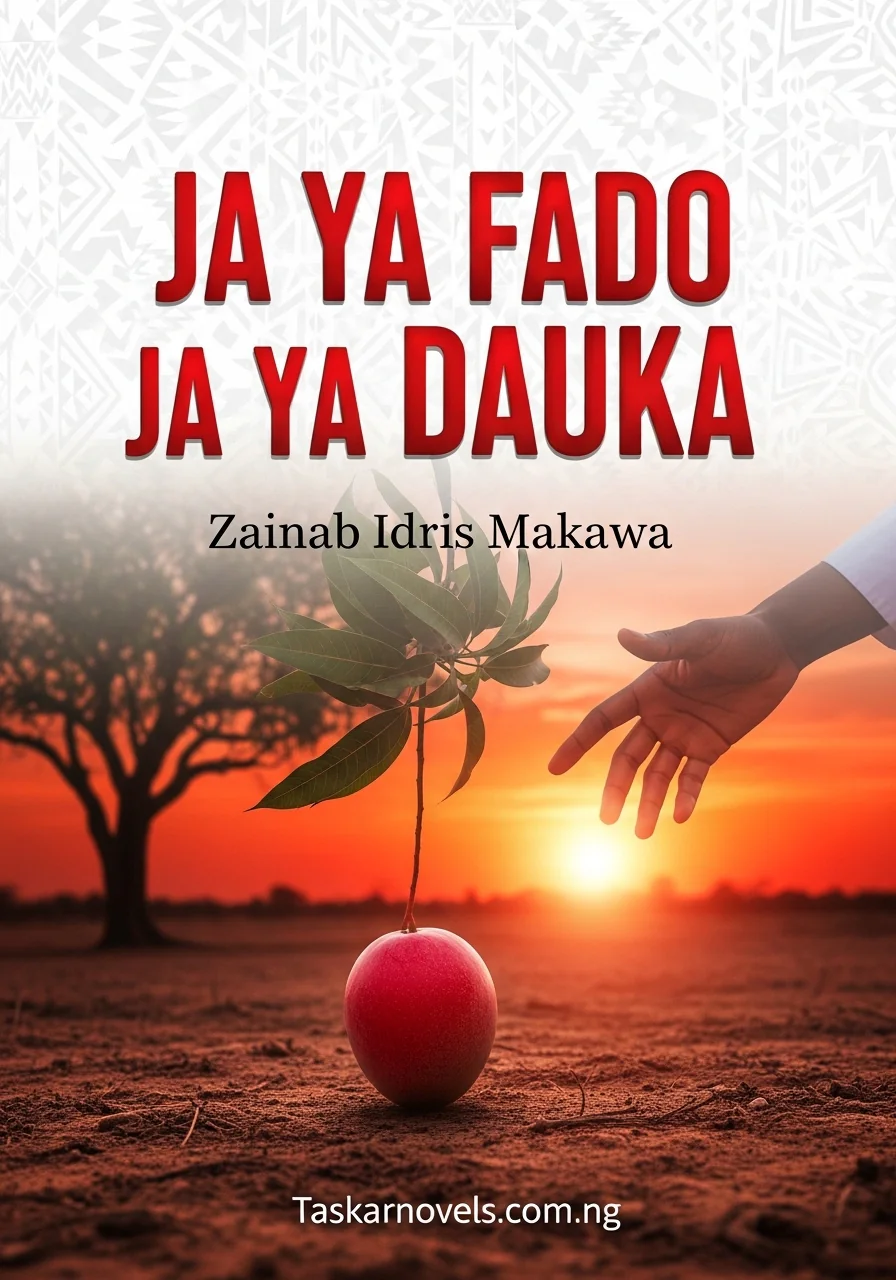

Imagine being born into a family where your dad is a big-time police commissioner but he just can’t sit still. That is the life of Asma’u Shahada. Her father, the CP, retired but he is always busy with his farms because he doesn't believe in just sitting around doing nothing. They are originally from a place called Kwalam in Jigawa state. Her grandfather was a big farmer too. It seems like the love for the soil runs in their blood. But the real drama in this story starts with her grandmother, Inna Ade. She is the kind of woman who doesn't take nonsense from anyone. She is loud, she loves to argue, and she is very protective of her people. If you are looking for where to find stories like this, you can always visit Taskar Novels to see more.
Asma’u has a big family. Her mom, Ummaah, is from Kano and she is the only girl among many brothers. But for Ummaah, it was the opposite—she had seven girls and only one boy. One of the brothers, Halifa, is a real bookworm. He has degrees and is even doing his PhD. Asma’u and Halifa are very close because she also loves to read and learn. But life wasn't always easy for her. When she was born, something very sad happened. Her grandmother’s best friend, also named Asma’u, died on that very same day. Inna Ade was so heartbroken. One part of the book says — "Inna Ade told me that from the moment she held me, it wasn’t even three minutes before she heard the news that her best friend Asma’u had passed away." (translated from Hausa). Because of this, Inna Ade insisted that the baby must be named after her late friend. That is how she became Asma’u, but her grandma always called her Fara Yar Shehu.
The drama really kicked off when Asma’u was just a little girl. Her father got a promotion and had to move to Taraba state. He wanted to take his daughter along so she could start school, but Inna Ade refused. She practically kidnapped the girl to the village! She told the father, "Shahada, are you really going to show me your power because of your daughter?" (translated from Hausa). Nobody could argue with Inna Ade when she was angry, so Asma’u grew up in the village of Kwalam. She didn't know much about her real parents or her siblings; she thought her grandmother was her mother. She spent seven years living a simple village life, playing around and not worrying about school. If you want to download Hausa novels that talk about family ties like this, you should check out the collection online.
Things changed when Asma’u got very sick. It was so bad that they had to bring her to a big hospital in Kano. She stayed there for a long time, and that was when she finally moved back into her father’s house. Her grandmother finally agreed to let her stay in the city because she was scared that "witches" in the village might harm her. But moving to the city was a huge shock for a village girl. She was already seven years old but she didn't know anything about school. Her parents enrolled her in a fancy school called Spring, but it was a disaster at first. While you follow her journey, you might also like to read ME GARI YA WAYA Book 3 which has its own share of family struggles.
In this story by Shatuu, we see how hard it is for a child to adjust to a new world. Asma’u was much bigger than the other kids in her class because she started late. She couldn't speak a word of English, and the school didn't allow anyone to speak Hausa. She felt so lonely and out of place. She says in the book — "I was someone who liked to play and cause trouble, I didn't pay attention to anything in class, so when we did exams, I came last." (translated from Hausa). It was really embarrassing for her father, who was a big man, to see his daughter failing like that. Her brother Halifa had to become very strict with her. He would sit her down every evening with a belt on the side to make sure she did her homework. It wasn't that he wanted to beat her, but he wanted her to take her life seriously. You can find many Hausa novels online that show this kind of sibling relationship.
The real trouble at school was a boy named Emma. He was a bully and he realized quickly that Asma’u couldn't defend herself because she didn't know how to speak English. He would tease her and take her things. One day, her mom sent her a nice lunch because she had missed breakfast at home. Asma’u was so happy to see the food, but Emma and his friends just snatched it and ate everything while she stood there crying. She couldn't even report him to the teacher properly because she didn't know the words to use. It was heartbreaking to see a girl who was so free in the village becoming so scared in the city. Stories like YAN MADIGO or DAN KARUWA also explore different sides of social life and challenges that people face.
As the story goes on, you see Asma’u trying to find her feet. She had to deal with sisters who were sometimes mean to her and a brother who was always pushing her to study. She missed the freedom of Kwalam and the way Inna Ade used to spoil her. But she also started to realize that she needed to learn if she wanted to survive in her father's house. The transition from being a village girl to a city girl is not easy, especially when everyone expects so much from you. The author really makes you feel the frustration of a child who feels "dumb" just because she doesn't know a language. If you enjoy deep emotional stories, you should also look for KOME DA LOKACIN SA to see how time changes everything.
The book also touches on the typical life in a big Nigerian household. The noise, the food, the arguments between sisters, and the way the mother tries to keep everyone together. There is a lot of humor too, especially when Inna Ade comes to visit and starts her drama with the sisters. She doesn't care if they are her granddaughters; if they touch her "Fara", she will give them a piece of her mind. This is the kind of vibe you get in SECONDARY SCHOOL where the characters are just trying to navigate their young lives. You can tell that the writer knows a lot about how these families work. It feels very real and relatable.
As Asma’u grows up, the story takes more turns. Since it is categorized as a romance novel, you can expect some feelings to start developing as she gets older. But the foundation of the story is really about her identity and how she fits into her family. Will she ever become the brilliant student her brother wants her to be? Will she ever stand up to bullies like Emma? And most importantly, how will her relationship with her grandmother affect her future? These are the things that keep you turning the pages. For more stories about growth and finding oneself, check out KWARYA TA GARI on the same site.
If you want to read the full story of Fara Yar Shehu and see how this village girl transforms, you can find the best Hausa novels right there. It is a story that will make you laugh, make you a bit angry at the bullies, and make you cheer for Asma’u as she tries to learn. Shatuu did a great job of showing us the life of a girl caught between two worlds. You should definitely head over to Taskar Novels to get this book and many others like it. They have so many interesting titles that you won't even know which one to pick first!